

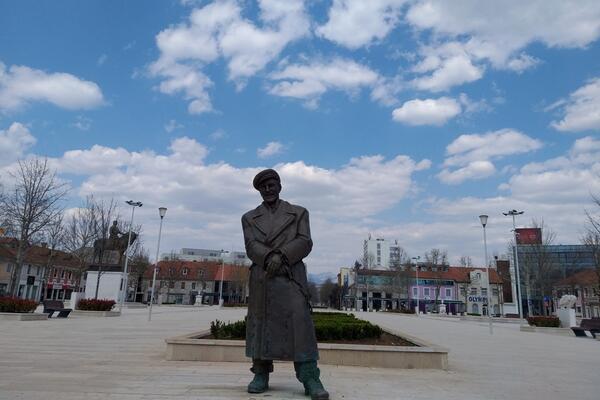

Nikšić is the second-largest city in Montenegro — an important cultural, industrial, and sports center of the country. A city that unites industrial tradition, cultural festivals, and natural beauty.
We bring you the experience of Nikšić in a completely different light.
A city with a soul
Nikšić – the city of steel and beer. The city of rock ‘n’ roll. A city an hour’s drive from the sea and just as far from Durmitor. A city with a soul.
“Does it still have one today?” we ask journalist Sonja Vujadinović, our host.
“Of course it does,” she says. “We’re talking about a city with 17 centuries of history layered within it, a city with thousands of archetypes and even four names – Anderva, Anagastum, Onogošt, and Nikšić.”
Situated on four rivers, Nikšić already had the Nikšić Reading Society back in 1881, which later gave rise to many cultural, educational, and social values the city is still known for today. “Before steel, beer, and sports – there was culture.”
Vujadinović recalls the words of anthropogeographer, ethnologist, and ethnographer Petar Šobajić:
“Podgorica is the trade center, Cetinje the administrative one, and Nikšić – the cultural and educational center of Montenegro.”
“To the question of whether this city has a soul – there’s no doubt: the soul is its true face,” she says.
Freedom Square – The Heart of the City
When asked where she would take guests visiting Nikšić for the first time, Sonja doesn’t hesitate:
“I’d start with the plan of Josip Slade from 1883 – the first urban plan in Montenegro, Renaissance in style, which gave the city its recognizable look.”
“So, first stop: Freedom Square. Because besides being grand in size, this square is also an architectural gem. In October, it’s especially beautiful – because of the colors, light, and liveliness.”

Freedom Square isn’t just a gathering place; it’s an open-air stage. Events such as Mini Book Salon, Authors on the Promenade, Festival Korzo, Urban Fest, and numerous concerts and manifestations take place there.
“It used to be a marketplace – they say the most beautiful one in the former Yugoslavia,” Vujadinović says. “In the early 20th century, then-mayor Danilo Šobajić ordered every citizen to plant a linden tree. That’s how Nikšić became the City of Lindens. There aren’t many left today, but the spirit of that time still lives on.”
“Squares can’t be museums,” Vujadinović says. “They are the lifeblood of a city – spaces of encounter, conversation, and life – the city’s soul.”
A City of Cafés, Poets, and Festivals
Nikšić has always been a city of bohemians and artists. They say many of the most beautiful songs were written in its cafés.
“The most beautiful songs really were born in Nikšić cafés,” Vujadinović explains. “There are still a few with checkered tablecloths, like the one in the park, and newer ones that have nonetheless kept the spirit and way of gathering. But cafés from the days when (HTP) Onogošt had 52 venues, and every one of them was full — those no longer exist.”
She adds that while cafés look different today, their spirit remains — they are still places for gathering, conversation, and creation. “Even today, news is shared, verses are written, and stories about this city are born in cafés.”
From the Square to the Park – Nikšić Through Time
“From the square, I’d take every guest to Šaka Petrović Square, then to Nikšić Park and King Nikola’s Castle. That’s the heart of historical Nikšić — the place where the city truly began,” says Sonja.
She emphasizes that the natural beauty surrounding Nikšić cannot be overlooked — Lukavica with its 365 springs, Krnovo (even with its wind turbines), Grahovo, Vilusi, Grahovsko Polje, Banjani… and of course, the four lakes that encircle the city.

“Imagine summer without going to Krupac Lake. You’d have to hold someone back from heading to Lake Fest, and then to Bedem Fest…”
A Finalist for the 2030 European Capital of Culture
“Nikšić is a city of festivals,” concludes Vujadinović. “That’s why it makes perfect sense that it’s a finalist for the European Capital of Culture 2030. Because so much life breathes within this city.
The most famous is Lake Fest, held every August on the shores of Lake Krupac, where thousands of visitors gather to enjoy rock, alternative, and electronic music in a unique natural setting. Just a few weeks earlier, the historic fortress Bedem transforms into a stage for Bedem Fest, a beloved event that celebrates regional rock and alternative bands under the open sky.

In late September and October, Nikšić hosts the Nikšić Guitar Festival, an international gathering of classical guitarists offering concerts, masterclasses, and competitions. September is also marked by the September Days of Culture, a month-long series of art, literature, and community events, as well as the Blues & Rock Festival, which keeps the city’s musical spirit alive. Earlier in the year, Ski Tour Fest at the Vučje ski center attracts winter sports enthusiasts, while the Days of St. Basil in May combine spirituality and tradition, honoring one of Montenegro’s most cherished saints. Summer brings additional color with the Street Musicians Festival, filling Nikšić’s squares with performers, jugglers, and music, and the year closes in December with the International Festival of Actor, a celebration of theatre and performance arts.
All these events together make Nikšić not only a city of steel and beer — but a city that truly lives through its culture.
Pogledajte još:
Preuzmi aplikaciju i prati vijesti


PRATITE NAS NA